
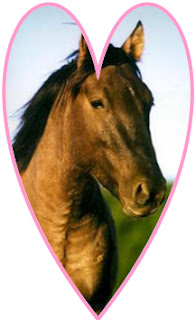
Mustang horses are known to have roamed the vast terrains of North America in large herds, so as to protect themselves from predators like wolves, coyotes, etc. These small, swift, surefooted, hardy horses range from an average size of 14"2 - 15"2 hands and 1,000 lbs or more in weight. They come in a variety of colors ranging from reddish-brown, bay, sorrel, brown or black in color. Mustangs have a life span of about 25 - 30 years. Let us have a look at some more interesting Mustang horse facts.
Interesting Mustang Horse Facts
Meaning of the Name
The name 'mustang' has been derived from the Spanish word 'mustengo', meaning 'ownerless beast' or 'stray horse'. These Mustang horses are also called wild horses because of their reckless nature. In fact, the word 'feral' suits them even better, which means wild and menacing.
Mustang Horse History
The Mustang horses that rambled across the North American grasslands in prehistoric times were referred to as dawn horses. However, at the end of the last ice age nearly 12,000 years ago, the Mustang population was wiped out from the American land. For several thousands of years, the American land was void of the thundering sound made by the hoofs of the Mustangs. Conquistadors from Spain once again introduced Mustangs to the American terrain in the 16th century. By the mid 1800s, there were millions of Mustangs rambling across the American land.
Symbol of the American West
The United States Congress in the year 1971 honored the Mustang horse with the title of "living symbols of the historic and pioneer spirit of the West, which continue to contribute to the diversity of life forms within the Nation and enrich the lives of the American people." A federal law was also passed in the same year regarding the ban placed on capturing, harming or killing Mustangs freely roaming on public land.
Mustang's Temperament
The Mustang is known for its intelligence and independent spirit. They have a mind of their own and do as they please. Their rugged toughness and endurance is truly remarkable! The amount of stamina they have is also amazing. Although wild and unpredictable by nature, these horses can be trained and tamed by patient and experienced handlers. They can be trained for horse racing, equine shows and competitions.
Mustang Herds
Mustang stallions head herds once they attain 6 years of age. There is a lot of struggle for dominance among the stallions and will gather their mares together and defend them from other stallions. They even try to steal mares from other Mustang herds by fighting with their competitor stallion. Their herd comprises of lots of mares and young herds. The young stallions chased off by the dominant stallion come together to form bachelor herds.
Plummeting Mustang Population
In the 1800s a great drought hit California, during which ranchers who found Mustangs to be a nuisance, got 40,000 Mustangs killed. Moreover, in the 1920s, the pet food industry slaughtered almost 500 Mustangs a day for pet food. In the 1930s, the processing of horse meat into chicken and pet food steeped to its peak with about 30 million pounds of horseflesh being canned. From the large numbers of 2.3 million Mustangs in the beginning of the century, the numbers stooped as low as 25,000 in the 1950s.

Save the Mustangs
Approximately 100 years ago, about 2 million Mustangs roamed the North American terrain. On the other hand, today we only have 25,000 Mustangs in the United States of America. More than half of the Mustangs existing in the US are in Nevada, with the rest of the Mustang population found in parts of Oregon, Wyoming and Montana. It's high time the we do something to prevent the numbers from plummeting further. As of today, the Mustang population is protected and managed by the Bureau of Land Management (BLM).
Mustangs are easily available through the Bureau of Land Management Wild Horse and Burro facilities. If you are looking to get one for yourself, then go for a young Mustang. The younger the better because they can be handled and trained easily. Hope this article on 'Mustang horse facts' was interesting and informative!


The feral horse that roams the plains of western America are the mustang horse breeds. The mustang horse breeds are a hardy, free roaming horse that is the descendant of the Spanish horses brought by the Spanish conquistadors. The Mustang is a popular sports mascot that stands for the qualities of hardiness, grace, speed and independence. Before we look at some of the mustang horse names, let us go into the details of mustang horse history.

Mustang Horse History
Thousands of years ago, before the beginning of time, there were many prehistoric horses that lived in North America. It is said that these horses died out during the last ice age around 10 to 12,000 years ago. There were many Native American stories and myths about these magnificent creatures that roamed the earth.
When Christopher Columbus discovered the New World, he brought with him horse breeds of Andalusian, Arabian and Barb ancestry. Soon began the reintroduction of horses to North America which became known as the mustang horse breed. The wild horses became a common sight in both north and south America. These were not wild horses, but Mustangs that were left, strayed or stolen, who soon became wild or feral horses.
The Spanish horses brought by the Spaniards were know for many qualities, of which hardiness was one of them. This was the main characteristic that helped the breed survive in the world and flourish as a breed that was made to survive.

As the Native Americans learned to mount the horse and horse riding, the number of wild horses grew. An individual Native American could own a hundred horses and the tribe could own over thousands of horses. As the nomadic tribes moved from place to place, it was obvious to lose some horses. Thus, the wild horses were scattered across the lands of America where they could multiply freely.
With the colonization by the English, French and Dutch, the mustang population knew no bounds. But with the intervention of the white man, the men began to pick up the choicest horses and turned the lesser quality breeds into the wild mustang breeds. These inferior horses were called the broomtails. You can read more on horse racing.
The mustang breeds survived in Nevada, Wyoming and other Western states with a trace of Spanish traits left in them. The mustangs were known to have many colors, like coyote duns, smokies, blues, blue roans, shining blacks, rusty browns, red roans, toasted sorrels, splotched appaloosas, cream-maned palominos,snip-nosed pintos, flea-bitten grays, black-skinned whites, etc. This was something about the mustang horse history. Let us now read about the mustang horse names.
Mustang Horse Names for Male Horses
- Amigo
- Allstar
- As Good As it Gets
- Black-Jack
- Blanca
- Chico
- Cigarette
- Cloud
- Condo
- Diego
- Flame
- Fru-Fru
- Glue-Boy
- Go Van Gogh
- Happy Trails
- Hidalgo
- Hombre
- Incognito
- Loco
- Mario
- Merryleg
- Monarch
- Mosaic Appaloosa
- Motorcycle Mustang
- Nacho
- Native Jewel Pony
- Pablo
- Paco
- Pancho
- Pepe Peso
- Pollo
- Power
- Prairie
- Salvador
- Si
- Sky of Enchantment
- Sounds of Thunder
- Teacher
- Uno
- Zack Attack
- Zeus
- Zippity Do Dah
Mustang Horse Names for Female Horses
- Apple-oosa
- Becky
- Bedazzled
- Bela
- Bonita
- Buttermilk
- Carmen
- Catherine
- Christina
- Christmas Parade
- Clover
- Copper Enchantment
- Cyril
- Dancer
- Eliza
- Eloise
- Epona
- Esmerelda
- Evita
- Gabriella
- Ginger
- Golden Feather Pony
- Harriet
- Hazel
- Jewel
- Lucy
- Moondance
- My Dazzlin Desire
- My Dazzlin Destiny
- Nova
- Opal
- Paloma
- Proudbottom
- Ramona
- Renewal of Life
- Rosa
- Rosie the Apparoosa
- Ruby
- Silver Lining
- Snowflake
- Stardust
- Sunka Wakan
- The Old Gray Mare
- Viva Las Vegas
- Whinney
- Whirlwind
Mustang Horse Facts
- The mustang horse names also include Fuzztail and wild horse.
- The word mustang means wild and untamed in Spanish.
- The mustang horse breed has been roaming freely since over 300 years. This has made it into a very thrifty, independent and hardy creature.
- The mustang was a favorite with the Native Americans and Cowboys due to its good cow sense that made it into a cattle working companion.
- The mustangs were about 2 million in number at the beginning of 20th century that came down to less than 30,000 by the end of the century.
- Under the law for The Roaming Wild Horse and Burro Act of 1971, the mustangs are protected under the law.
- The mustang is about 13.2 to 15.2 hands high and is light weight, athletic and an intelligent horse known for its stamina.
You can read more on interesting facts about horses in the article mustang horse facts.
This was some information related to the beautiful and sturdy mustang horse breed. With a lineage of great horses running in their blood, the mustang today is mostly used for stock work, riding and endurance riding. I hope this article on mustang horse name has helped you find the right name for your 'wild horse'.


