Pages


5 Nov 2010

Charity Show


More than 75 years ago, the Charity Horse show began. Breck Cabell, Col. B.F. McCleland, W.H. Pullen, Sidney Robinson, Mayor Walter Scott, Robert Stockett and Ben Wakefield started the horse show in 1930. During its first year, the show was held on Stockett property and was called the Jackson Horse Show. Initially, this was a multi-breed show with Hunters/Jumpers, American Saddle Bred and Walking Horses. The show was moved to the Fairgrounds in 1931. In 1933, the Jr. Auxiliary sponsored the show on the Fairgrounds in front of the big grand stand. The Girl Scouts took over sponsorship of the show in 1934 and continued to sponsor the show through 1936. It became a three-day show in the year 1936. In 1937, the Jr. Auxiliary again sponsored the horse show.
The Mississippi Charity Horse Show became a premier society event for the city of Jackson. Women and men would dress in their finest to attend the performances. Downtown stores, like Kennington’s, McRaes, and the Emporium, would decorate their Capital Street windows especially for the horse show. In 1938, the Mississippi State Horse Show Association was formed and has sponsored the charity show from that year forward. World War II interrupted the show in 1942 for one year. People really wanted to see these fine horses perform again, so in 1943, the show continued. The year 1944 marked the first year in which the show was held at night due to electric lights being added to the big grand stand. During the years 1951 to 1956, the Jr. League of Jackson co-sponsored the event with the Mississippi State Horse Show Association. During the scheduled show dates in 1957, it rained for three days causing the outdoor show to be postponed for several days. Following the 1957 show, the big grand stand was blown down by a storm. As a result, the show was cancelled from 1958 to 1962 until the new location, the Coliseum, was completed. From 1963 through 2009, it continued in its present location. In June of 2009, the decision was made by the Mississippi Charity Horse Show Association to relocate the 2010 show to a new facility designed for equine events. Beginning in 2010, the show will be held at the Kirk Fordice Equine Center located next to the Coliseum on the Fairgrounds.
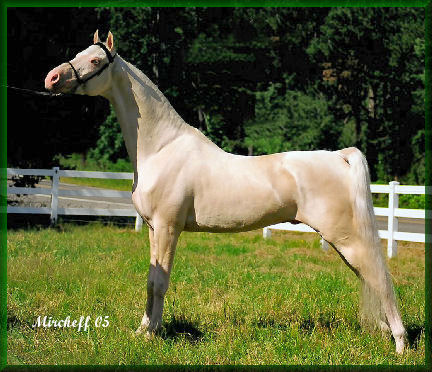


The Mississippi Charity Horse Show is recognized as premier Walking Horse Show drawing talented horses, riders and trainers from throughout the country. Proceeds from this show have always benefited a charity.


Tennessee Walking Horse


Horse

History of Breed:

The Tennessee Walking Horse is a unique breed that began in the mid 1800’s in the central part of Tennessee. This breed is a product of the farmers crossbreeding American Saddle horses, Standardbreds, American Thoroughbreds, English Thoroughbreds, Morgans, Canadian Pacers and Narragansett Pacers. The first Tennessee Walking Horse, “Black Allen”, was born in 1886.
The Tennessee Walking Horse is well known for its easy calm spirit and its smooth and pleasurable gaits – flat walk, running walk, and canter.

Flat Walk:

The flat walk should be true, bold, and four cornered. The horse should nod the head with every stride and bring each forefoot to the ground a mere second before the diagonally opposite hind foot, touches the ground. The forelegs should move straight, breaking at the knees and reaching forward in an elevated arc. The rear legs should follow through close to the ground, comfortable and over-striding the front tracks.

Running Walk:

The running walk should be the same general motion as the flat walk, but with additional speed. The horse shall exhibit a smooth gliding, overstepping, and four-cornered gait, with greater stride and accelerated head motion. The running walk should be a free and easy gait. Horses exhibiting an exaggerated, hesitating way of going, with tendency to point with the front feet are not inform.

Canter:

The canter should be smooth and straight on both leads, not walking behind, but cantering on both ends with a rolling, rocking chair motion, comfortable in hand. Exaggerating ‘pumping’ of the horse at the canter is not considered good form.

Conformation:

In general appearance, the Tennessee walking horse should have an intelligent look, neat head, well-shaped and pointed ears, clear and alert eyes, and a tapered muzzle. The neck should be long and graceful and the shoulders muscular and well sloping. The back should be short with good coupling at the loins. The animal should be deep in girth and well ribbed and the chest should be of good proportion and width. The croup should be generally sloping and the hips well muscled with muscular development extending down toward the hocks. The legs should be flat and cordy.


Fun Facts about Horses


  • There are about 75 million horses in the world.
  • Horses' hooves grow approximately 0.25 in a month, and take nearly a year to grow from the coronet band to the ground.
  • In the state of Arizona, it is illegal for cowboys to walk through a hotel lobby wearing their spurs
  • Cross-country jumps are marked with a red flag on the right side and a white flag on the left side; the horse has to jump through these two flags or it is considered out of bounds and you are disqualified.
  • A healthy adult horse should have a pulse of between 36 and 40 beats per minute while at rest
  • Arabians have one less rib, one less lumbar bone, and one or two fewer tail vertebrae than other horses.
  • Mr. Ed, the talking equine star of the 1960s television series, was a golden palomino. He learned an enormous amount of tricks for his role, including answering a telephone, opening doors, writing notes with a pencil, and unplugging a light. Apparently, Mr. Ed would occasionally have a fit of temper, as befitting his star status, and would stand stock still, wheezing and refusing to move.  
  • 7.1 million Americans are involved in the industry as horse owners, service providers, employees and volunteers. 3.6 million and 4.3 million of those participated in showing and recreation, respectively, with some overlap in cases of people who participate in both activities. 941,000 people participated in racing in either a professional or volunteer capacity. 1.9 million people own horses. In addition to the people actually involved in the industry, tens of millions more Americans participate as spectators.
  • The horse industry directly produces goods and services of $25.3 billion and has a total impact of $112.1 billion on U.S. gross domestic product. Racing, showing and recreation each contribute more than 25% to the total value of goods and services produced by the industry.                                                                                        
  • The industry's contribution to the U.S. GDP is greater than the motion picture services, railroad transportation, furniture and fixtures manufacturing and tobacco product manufacturing industries. It is only slightly smaller than the apparel and other textile products manufacturing industry.                                                                                      .
  • “If you want a kitten, start out by asking for a horse” -  Anon
  • “The horse is God's gift to man”. - Old Arab Proverb
  • “Show me your horse, and I will tell you who you are”. - Old English saying
  • "The one great precept and practice in using a horse is this, never deal with him when you are in a fit of passion." Xenophon, The Art Of Horsemanship, 400 BC
  • Adult respiratory rate is 8-16 breaths per minute
  • A horse typically sleeps two and half to three hours a day
  • Horses younger than 4 years can concentrate for a maximum of 10-15 minutes
  • Horses lie down only about 43.5 minutes a day
  • Horses sleep longer in the summer than in the winter
  • A horse’s heart weighs nine pounds
  • The horse is a herbivorous mammal
  • All horses (including zebras) belong to the genus equus
  • Horses began to evolve on the American continent over 60 million years ago, they later died out and were reintroduced by Spanish settlers
  • A zedonk is the offspring of a zebra and a donkey
  • No two horses are identical
  • The left side of a horse is called the “near side” and the right side is the “off side”
  • A horse has approximately 205 bones
  • A horse is described as a ‘foal’ for its first year of life
  • Foals have milk teeth, which are replaced by permanent teeth around 3-5 years old
  • A horse’s teeth can be used to estimate its age
  • Horses generally dislike the smell of pigs
  • A female horse is called a ‘filly’
  • Horses are traditionally measured in ‘hands’, this was originally the width of a man’s hand and has been set at 4 inches  


Honza Bláha a Gaston

Úvodhttp://www.honzablaha.cz/EN.htm


Knight John Blaha, who comes from a combination of natural communication, and equestrian sports. It can be seen in many concerts throughout Europe. The base has a farm near Klatovy Srbica in western Bohemia, where they park their horses, including the famous Gaston. Gaston is a warmblood common origin, that accumulate more than 150 cm. However, it is a horse with a big heart and a stubborn spirit. Together with Jan toured Europe and the USA.With Jan, you can also find in various seminars and courses throughout Europe. It teaches students not only advanced but also the beginners. "It's easier to learn things very well than something complex přeučovat later." Says Jack.In his spare time, sometimes for pleasure and went on some jumps.Leadership gradually takes the show on their hooves arábek Maxim (nar.2000) and fight alongside him in the position of the Quorum (PRE) and Conte (Oldenburg).Jack also deals with training of sport horses, young horses and obsedáním help people buy a horse.


Equine Learning


Communication with the Man:It seems fair to say that man unconsciously communicates with the horse, which gives off the odor. People frightened and aggressive, emit odors that reveal his state of mind horse hypersensitive, making him apprehensive or aggressive.The saying 'A confident man is a confident horse reveals the hypersensitivity of the animal. The horses feel the mood of the rider and react with it. A horse can be mounted to realize, you are dealing with an experienced person or not, depending on the stimuli that sends and receives the horse through the receptor cells which has along its back, and all body. Man seeks to communicate to introduce yourself by touching or by tapping.The stroke is another form of communication with horses and build a relationship between the two. The act of treatment is an example, and when it mounts, many of the languages of cooperation are related to the touch. For example, the leg exerts little pressure receptor cells of the horse and communicate with your hands touch the mouth, through the bridle and bit. Some horses learn to attract men neighing loudly, if food is delayed.
Communication Between Horse:The horse is a herd animal and need to communicate with other members of the same.Of course it has no philosophical discussions. They just need to convey basic emotions and to establish a dominance hierarchy without resorting to violence. The domestic horse treat the man as an element of the herd, by using the same kind of body language to us.This body language can be manifested in several ways:- Content:
            
- Signs of Happiness - A happy horse does not care about others who are around you.- Impatience:
            
- Head Movements - The horses do not like being ignored, may require attention by giving a push with his nose.
            
- Hitting with hooves - A horse may become impatient when waiting for food or when it stuck.- Annoyance:- Indentations in the other horse - The bite just means' my position in the hierarchy allows me to bite you when I please. "- In the stables - If a horse wants to be left alone, turns his back to the other horses, does not want talks.Horses communicate vocally, whinnying for companionship or for excitement.


Habituation:Learning can also be effected by means of habituation, which consists in decreasing trends in response to stimuli that have become familiar, due to continuous exposure to them.Can be illustrated as follows:A horse and when exposed to a sudden noise startles, but if noise is repeated, two three times, the shock will gradually diminish until being ignored.The same is true when preparing a horse, during the process of thinning to be mounted.First it is warming by passing it to the guide, during which several are sudden movements, like raising his hand to shake off a fly, hit his foot on the ground etc ...The first time the presence of these movements the horse is startled, but after being repeated several times, we can recognize them as relatives.


The horses are usually afraid of water because they can not see the ground through it.This type of fear, involves a more delicate process of learning. The horse has to feel confident, and man in turn must show him that there is nothing wrong with a little puddle of water and there is no reason to be afraid.At first, the wet paws reacts immediately, speeding up the pace and can jump, being suspicious, but after much insistence of man and refusal by the horse, ultimately pass without fear.The habituation process has already ended.With regard to cognitive learning, a horse takes several elements of knowledge or cognition, which are organized for use.The man when a horse exercises, or when the passes will guide, or in other words, when subjected to a test of physical preparation, implements the voice, which combines the various gaits of the horse.Man - the Horse: Voice calm by Step
                                   
High Voice and Firm to Trot
                                   
Loudest voice and the steady canter
                                   
Whistling quietly to StepIt follows that the horse learns by doing, and not the other way>.
A Test of Communication:According to Paul Watzlawick, in 1904, the dream of establishing communication between man and horse, became real, the news spread.Hans was a horse with which Wilhelm von Osten established communication. He taught her arithmetic, telling time and recognizing people through photographs.Hans tapped his foot on the ground to communicate, Batia once for the A and so on.The horse was subjected to several experiments to verify that there were no tricks in communication, for always answer correctly to the problems that the owner put it, and passed all with flying colors.But it was later discovered that Stumpt the following:The horse always failed to solve the problem it was set was not known by any of the gifts. The horse also failed when you put blinders that prevented him from seeing people.It can be concluded that the horse over time have learned to solve problems and pay more attention to responding to changing posture of its owner. The reward was that the main motivation and attention of Hans.
Conclusions:The domestic horse has always been an important place in human life. When horses were domesticated, are likely to play two roles.The horses of forests, slower, probably were beasts of burden. The horses of the plains, faster than a means to travel faster.Nowadays, the horses are no longer used in battle, tractors replaced them in agriculture and the diesel engine is the main means of transport, but the horses continue to have a great esteem. Since they were domesticated humans to selectively reproduced in order to meet specific needs or concepts of beauty. There are now several different types of horses and a large number of specific breeds recognized internationally. As in the past, different types of work require different types of horses.


3 Nov 2010

Riding Club Championships

Riding Club Championships is an online game of horse. You can start your own stable with your friends and compete against people from around the world. The game portrays the equestrian sports in a very realistic manner, trying to capture the true feeling of riding on horseback.


sample


You start the game, learning to handle your horse through practice lessons guided by a teacher. You will learn how to use the different rhythms of the horse, maneuver it, and finally how to jump over obstacles with your horse.

The main game mode in the Riding Club Championships is jumping. You can try out selected courses alone, playing friendly matches with other users, or complete in ranked matches. Each player has a ranking that shows how skilled he or she is compared to other players. These ratings can be viewed globally or to the stable you are in you raise or lower your ranking by competing in ranked matches against other players.The game has a level system where each layer has a different set of challenges associated with it. By completing these challenges, you increase your level and have access to new challenges, different disciplines and modes of play. sample

Training and caring for your horse is an important part of the game. Having a well-trained horse will give you an edge in competitions, but his skill as a player is more important. 
The game is different from other online games, where someone who has an avatar strongest tend to win, regardless of expertise. Your horse has three basic characteristics that are obedience, the speed of a força.Estas skills will improve when you train your horse.

Unlike offline games, the development team continues to make new content for the game after launch. There are some updates every two months, containing new features, bug fixes and optimization. As a member of the Riding Club will automatically download these new patches for free. What the updates will contain depends on the feedback from our users. If you have special wishes for the game, please post in the forum.You can download the game from the banner of this page. Once you have downloaded, you need to install it. Then you can try it free for two hours before having to choose a subscription plan. The game costs about € 5 per month, depending on which subscription you choose.

If you do not have the patience to download the client, the game will also be available in stores for 199 NOK. This will include three months of signing of Riding Club.To become a member of our community, register by clicking the "sign up" button at the top of this page. If you have any questions, check out our FAQ or contact us playing our contact form.Your virtual horse is waiting for you!

sample
sample